

Treating teeth grinding with a bite splint
Teeth grinding and clenching (bruxism) are often caused by stress, the position of the teeth, sleep apnea or other medical, anatomical or psychological factors. Because these causes often cannot be resolved quickly or easily, a custom-made bite splint is frequently a helpful treatment: it protects the teeth from further wear and relieves the jaw joints and chewing muscles. Dr. Michael Adler fits it at the Swiss Dental Center at Hardbrücke in Zurich. It costs CHF 700 to 1,400 including fitting.
Book an appointment · Teeth grinding overview · Treatment with botulinum toxin
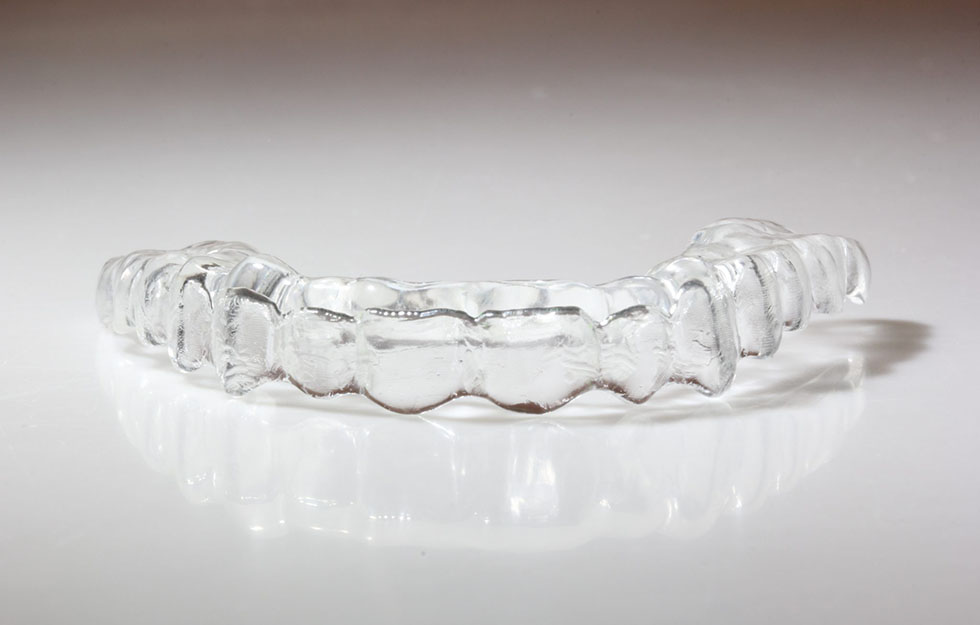
How does a bite splint work?
A bite splint is worn at night and, if needed, during the day. It distributes the chewing forces evenly, protects the tooth substance from further wear and gives the jaw joints and chewing muscles a balanced, more relaxed position. The splint does not stop the grinding; it makes it harmless. In many people the muscle activity decreases over time.
How your splint is made
It starts with a dental examination of the teeth, jaw joints and chewing muscles, together with the search for possible causes. The production of the splint is accompanied by measurements of the jaw joint position. The splint is then adjusted several times if necessary, so that it is exactly right for you and as delicate as possible. Most CMD patients would no longer want to be without such a splint in its optimal position. Physiotherapy, self-exercises and relaxation techniques can also ease the symptoms.
If the splint alone is not enough
If tension, jaw pain or tension headaches persist despite a well-adjusted splint, the overactive chewing muscles can additionally be treated with botulinum toxin. The splint usually remains part of the treatment, because only the splint protects the teeth. More: Treatment with botulinum toxin.
Costs and health insurance
A custom-made bite splint costs CHF 700 to 1,400 depending on the system and effort, including fitting. A contribution from basic health insurance is possible but not guaranteed. We are happy to ask your insurer on your behalf for a contribution towards the total cost. On request, you will receive a quote before treatment that you can submit to your insurer for prior cost approval. More information: Costs & health insurance.
Frequently asked questions about the bite splint
How does a bite splint help?
Worn at night and during the day if needed, the splint distributes the forces evenly, relieves the jaw joints and muscles and protects the tooth substance from further wear. Physiotherapy, self-exercises and relaxation techniques can complement this and ease the symptoms.
Does the splint stop the grinding?
Not directly. The splint absorbs the forces, protects the teeth and relieves the joints and muscles. In many people the muscle activity nevertheless decreases over time. If muscle symptoms persist, treatment with botulinum toxin may be considered in addition.
What does a bite splint cost, and does health insurance pay?
A custom-made splint costs CHF 700 to 1,400 depending on the system and effort, including fitting. A contribution from basic health insurance is possible but not guaranteed. We are happy to ask your insurer on your behalf for a contribution towards the total cost.
Suspect grinding or CMD? Book an examination appointment at the Swiss Dental Center: book online, phone 043 444 74 00 or via the contact form.
Author: Michael Adler, DMD, MSc – dentist specialising in dental sleep medicine · Last updated: September 2026 · Basis of this page: S3 guideline “Diagnosis and treatment of bruxism” (DGFDT/DGZMK) and current systematic reviews.